
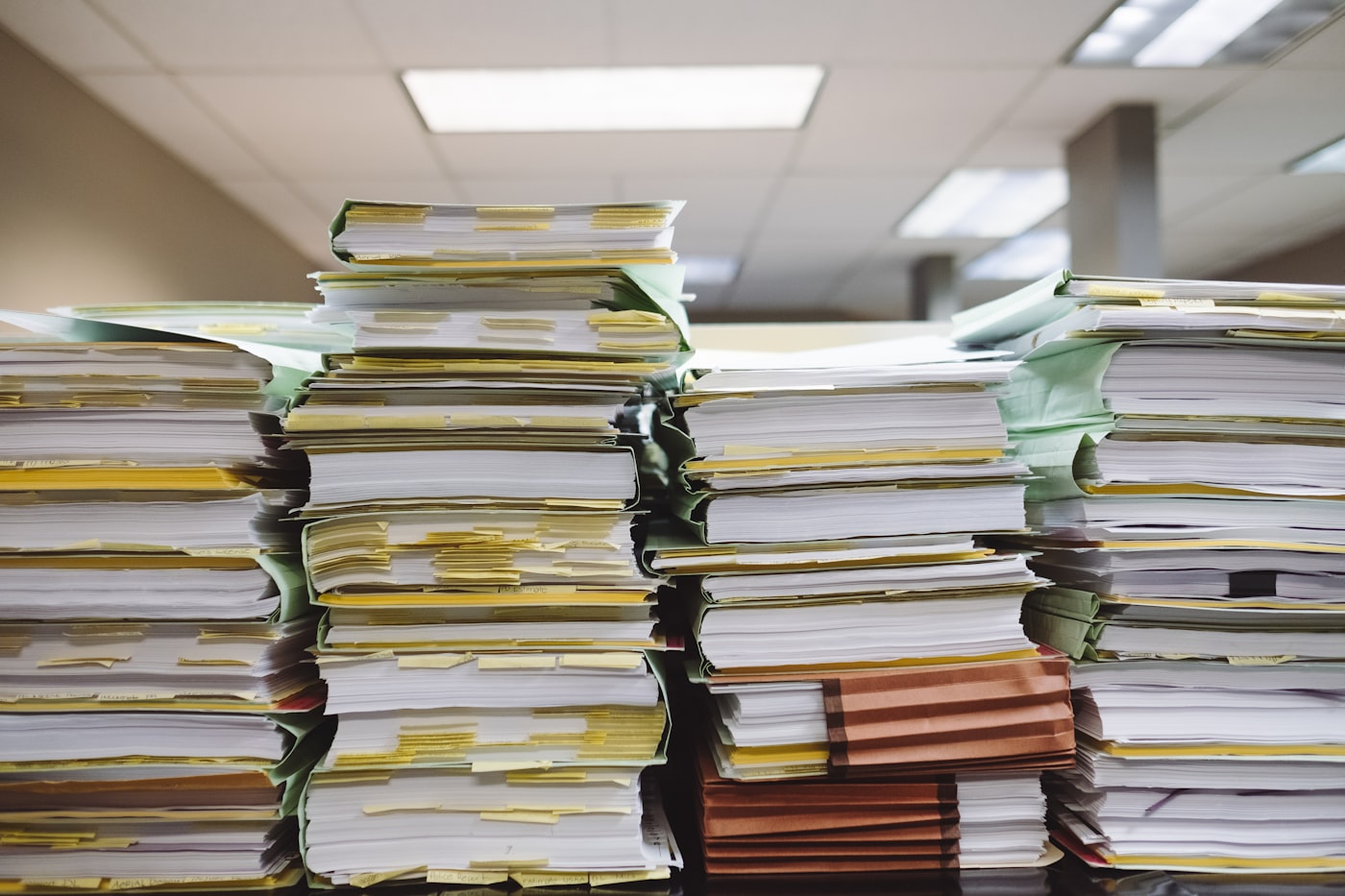
Most businesses don't have a shortage of data. They have decades of it, sitting in filing cabinets, scanned into folders nobody opens, buried in spreadsheets that only one person understands, and scattered across product catalogs, invoices, and regulatory paperwork that was never meant to talk to each other.
The problem isn't that this data doesn't exist. It's that none of it is in a shape an AI system can actually use. Before you can build a reliable chatbot, an AI agent, or any kind of automation on top of your business, that raw information has to be pulled out, cleaned up, and organized into something consistent. That's what "AI-ready data" means, and it's the step almost everyone skips.
What "AI-Ready Data" Actually Means
Having data and having usable data are two different things. A filing cabinet full of invoices is data. A folder of scanned product brochures is data. A decade of spreadsheets with different column headers from every employee who ever built one is data.
None of it is AI-ready until it's been converted into a structured, consistent format where every record uses the same fields, the same units, the same naming conventions, and the same categories. AI-ready data means:
- Extracted — the actual information (line items, dates, quantities, customer names, product specs) has been pulled out of its original format, whether that's a PDF, a scanned page, or a spreadsheet
- Normalized — inconsistent formatting has been standardized, so "10 units," "10 pcs," and "qty: 10" all become the same thing
- Classified — every record is tagged against a shared taxonomy that reflects how your business actually organizes information, not a generic template
Once data meets those three conditions, an AI system can search it, compare across it, and answer questions about it accurately. Before that, it's just files.
Why Messy Data Breaks AI Projects
This is the part most businesses find out the hard way. AI models are genuinely good at reading a single document. Ask a modern AI tool to summarize one invoice or one product spec sheet, and it'll usually do it well.
The problem shows up at scale. When an AI agent or chatbot has to work across hundreds or thousands of documents that were never standardized, small inconsistencies compound into real failures:
- Two files use different names for the same product, so a search misses half the matches
- One spreadsheet tracks orders by date, another by invoice number, and there's no shared key connecting them
- A regulatory document references a part number format that doesn't match the one used in the parts catalog
- A scanned invoice has no machine-readable text at all, so it's invisible to any system that isn't explicitly built to read images
When an AI system hits this kind of inconsistency, it doesn't fail loudly. It fills the gap with a guess, an incomplete answer, or a confident-sounding response that's simply wrong. That's a much worse outcome than the AI system doing nothing, because it looks reliable right up until someone acts on bad information.
What Messy Legacy Data Actually Looks Like
This isn't abstract. For most businesses, "messy data" means some combination of:
- Paper files and scanned documents — years of client records, contracts, or service history that only exist as physical paper or unsearchable scans
- Product catalogs and brochures — specs, pricing, and descriptions formatted for print, not for a database
- Spreadsheets built by different people over time — inconsistent column names, missing fields, manual entry errors, duplicate records
- Invoices and quotes — thousands of individual PDFs, each generated by a different tool, template, or vendor
- Regulatory and compliance documents — dense, highly specific paperwork where accuracy actually matters and there's no room for the AI to guess
- Referral and intake records — customer or client information collected inconsistently across forms, emails, and phone notes over the years
Individually, none of these are unusual for a business to have. Collectively, they represent a huge amount of institutional knowledge that's completely invisible to any AI system layered on top of it, until someone does the work of pulling it into a shared structure.
The Four Steps to an AI-Ready Data Foundation: Ingest, Extract, Normalize, Classify
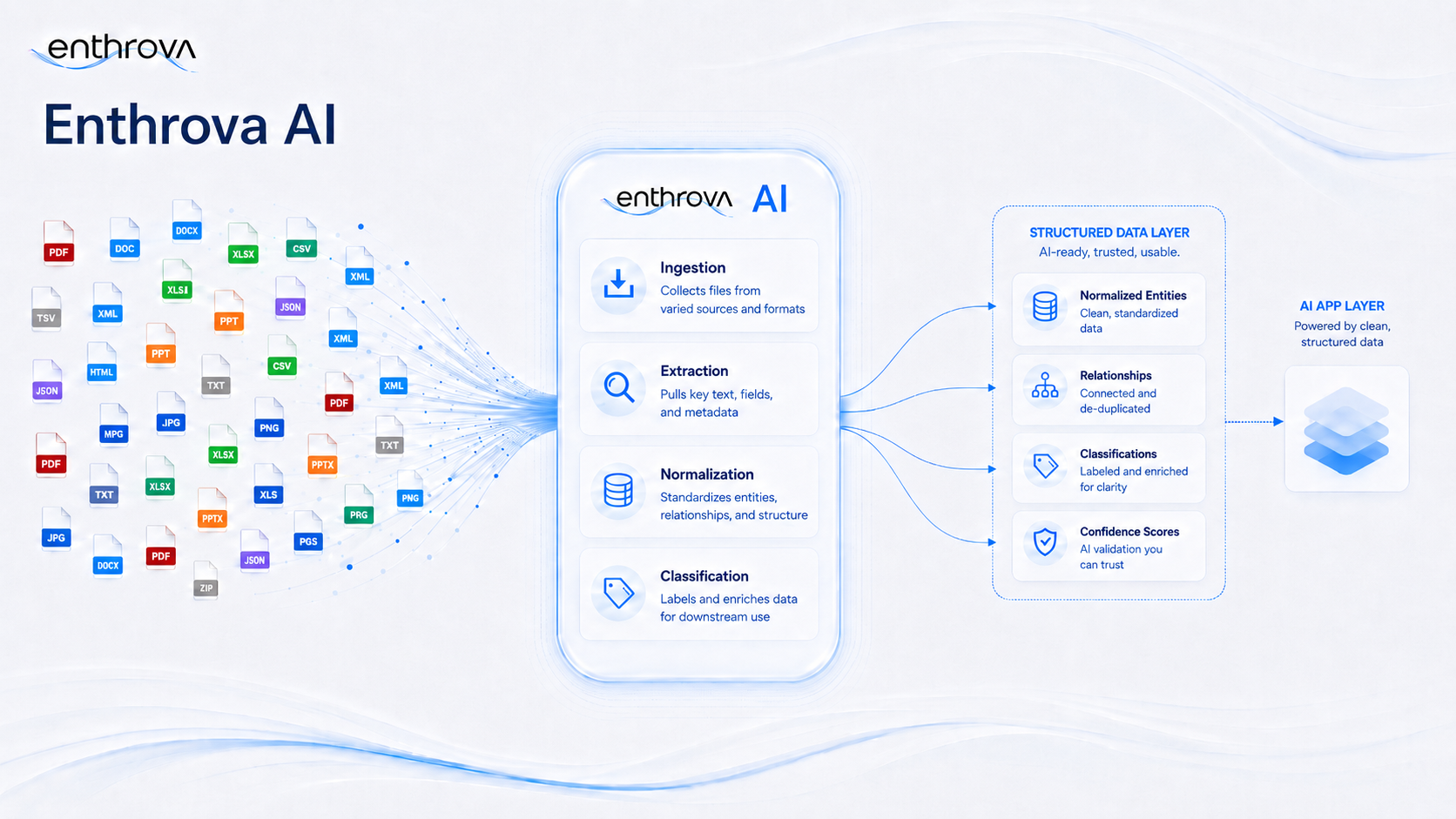
Turning scattered records into AI-ready data follows the same four-step process, regardless of industry:
1. Ingest
Every file gets pulled into one place, paper scans, PDFs, spreadsheets, images, and documents, regardless of source or format, instead of staying spread across drives, inboxes, filing cabinets, and individual employees' desktops.
2. Extract
The actual data inside each file gets pulled out, line items, dates, names, quantities, specs, whatever the original file type or formatting. This is the step that turns a static PDF or scanned page into something searchable.
3. Normalize
Extracted data gets standardized into one consistent format, so different date formats, unit abbreviations, and naming conventions collapse into a single shared structure instead of a dozen slightly different ones.
4. Classify
Every record gets tagged against a shared taxonomy, categories and fields built around how your business actually operates. This is what makes the data queryable: every record uses the same structure, so an AI system can reliably find and compare across all of it.

This is exactly the process Enthrova AI was built to run. It's Enthrova's proprietary data processing system, purpose-built to ingest, extract, normalize, and classify years of scattered business records, paper files, PDFs, scans, spreadsheets, into a clean, structured, AI-ready foundation your team can actually use.
What This Looks Like by Industry
A distributor or manufacturer sitting on years of product catalogs, spec sheets, and pricing brochures in inconsistent PDF formats can turn that into a single structured product database, so an AI agent can answer "which of our products meet this spec" instead of someone manually searching a dozen catalogs.
A home services or contracting business with a decade of paper invoices, service records, and handwritten job notes can convert that into structured customer and job history, so a chatbot or agent can accurately answer questions about past service, warranty status, or billing without a staff member digging through filing cabinets.
A business in a regulated industry with compliance documents, permits, and inspection records scattered across formats can classify all of it against a shared taxonomy, so a regulatory question can be answered by pulling the exact relevant document instead of hoping someone remembers where it's filed.
In each case, the AI tool isn't the hard part. The hard part, and the part that actually determines whether the AI tool works, is the data underneath it.
Why This Has to Happen Before AI Agents or Automation Work Well
It's tempting to skip straight to building the exciting part: a chatbot that answers customer questions, an AI agent that automates follow-up, a workflow automation that connects your systems. But every one of those tools depends entirely on the data it can access.
A chatbot trained on inconsistent, unstructured records will answer some questions well and get others quietly wrong, with no obvious way to tell which is which. An AI agent asked to check inventory, pull customer history, or reference a product spec is only as good as the underlying records it's pulling from. Workflow automation that's supposed to sync information between systems breaks down the moment those systems don't agree on what a record even means.
Structuring your data first isn't a delay before the "real" AI work starts. It is the real work. Everything built afterward, agents, chatbots, automations, reporting, gets meaningfully more reliable because it's standing on a foundation that actually holds up.
How to Know If Your Business Needs This
You probably need to build an AI-ready data foundation if:
- You have years of paper records, scans, or PDFs that have never been digitized into a searchable format
- Your spreadsheets were built by different people over time and don't share consistent fields or naming
- You've tried an AI tool or chatbot and gotten inconsistent or incorrect answers
- Product, customer, or compliance information is spread across multiple systems that don't talk to each other
- You're planning to build an AI agent, chatbot, or automation and want it to actually be reliable, not just impressive in a demo
You're probably in reasonable shape if:
- Your business data already lives in a small number of connected systems with consistent fields
- Most of your records were created digitally, in a standard format, from the start
- You don't have a significant backlog of paper, scanned, or legacy files
Most established businesses, especially ones that have been operating for more than a few years, fall into the first category more than they expect. The good news is that this is a one-time foundational project, not an ongoing burden. Once your historical data is structured, new information can be captured in that same format going forward.
The businesses that get the most value out of AI agents, chatbots, and automation aren't the ones with the most advanced AI tools. They're the ones whose AI tools are working from data that's actually usable.
Frequently Asked Questions
What does "AI-ready data" actually mean?
AI-ready data is business information that's been extracted from its original format, paper, PDF, spreadsheet, or scan, and converted into a consistent, structured record with standardized fields, units, and categories. It's the difference between having data and having data an AI system can actually search, compare, and act on reliably.
Why can't AI tools just work with my existing spreadsheets and PDFs?
AI models handle a single document well. The problem is scale: most businesses have hundreds or thousands of files, each formatted slightly differently, with inconsistent naming and missing fields. An AI system searching across all of them has no reliable way to know that different labels refer to the same thing, which causes wrong answers, not just slow ones.
What is data normalization and classification?
Normalization converts inconsistent formats, dates, units, naming conventions, into one consistent standard. Classification tags each record against a shared taxonomy built around how your business operates, so a query like "every invoice from this vendor over $500" returns a complete, accurate answer instead of a partial one.
Do I need AI-ready data before I build a chatbot or AI agent?
For anything beyond simple scripted responses, yes. A chatbot or AI agent is only as accurate as the information it can retrieve. Businesses with clean, structured data get dramatically more reliable results from the same AI agent or chatbot build than businesses layering AI on top of scattered records.
How long does it take to turn legacy business records into AI-ready data?
It depends on volume and file variety more than raw page count. A few hundred consistent invoices move quickly; years of mixed paper files, scans, spreadsheets, and catalogs take longer because each format needs its own extraction and normalization pass. Most projects start with a bulk upload, then move through automated extraction, normalization, and a collaborative taxonomy-building phase.